
Why Travelers Are Switching to Digital SIMs for Global Connectivity
Unlimited eSIM Data Plans Without Limits or Hidden Caps
eSIM unlimited data is the ultimate freedom to stream, browse, and video-call without ever checking a data cap or hunting for Wi-Fi. It works by digitally embedding a profile onto your device, instantly activating a flat-rate data plan that never throttles or cuts you off. You simply scan a QR code, pick your destination, and enjoy continuous high-speed connectivity across the globe. This means you ditch physical SIM cards, juggle no local plans, and experience true unlimited internet on your terms.
Why Travelers Are Switching to Digital SIMs for Global Connectivity
Travelers are switching to digital SIMs because eSIM unlimited data eliminates the need to hunt for local SIM cards at each destination, offering seamless connectivity immediately upon arrival. With a single eSIM plan, users avoid roaming fees and physical SIM swaps, maintaining high-speed data across multiple countries. This is especially valuable for digital nomads and frequent flyers who require constant access for maps, communication, and work. Why do travelers choose eSIM unlimited data over local SIMs? Because it provides predictable pricing and continuous service without navigating foreign telecom shops or enduring activation delays, making global data access a straightforward, hassle-free experience.
The Rise of Carrier-Free Mobile Plans

Carrier-free mobile plans have surged as travelers reject rigid, two-year contracts for the flexibility of eSIM unlimited data. These plans operate independently of any physical SIM or national carrier, letting you activate a local or global data allowance on demand. You pay only for the period you need, avoiding roaming fees or unused monthly quotas. Switching between providers for better coverage or pricing becomes instantaneous, without unlocking devices or visiting stores. This freedom eliminates the need to juggle multiple physical SIMs or commit to a single network.
Carrier-free mobile plans grant travelers on-demand, contract-free connectivity, enabling instant eSIM activation with unlimited data for any destination.
How Virtual SIMs Simplify Roaming for Frequent Flyers
For frequent flyers, virtual SIMs eliminate the logistical nightmare of swapping physical cards between flights. With an eSIM unlimited data plan, you activate a local profile before departure, ensuring immediate connectivity upon landing without hunting for kiosks. This simplifies roaming by automating network selection across countries, bypassing expensive carrier add-ons. A single eSIM for global travel lets you keep your primary number active while using a local data allowance, avoiding surprise bills. The process is entirely digital—scan a QR code, choose a regional plan, and roam seamlessly through multiple hubs with one consistent connection.
Key Differences Between Physical SIMs and eSIM Profiles
The core difference lies in tangibility versus software. A physical SIM is a plastic card you insert, tying you to a single carrier per slot. An eSIM profile is a digital file downloaded straight onto your phone, removing the need to swap tiny cards mid-trip. This allows instant carrier switching for unlimited data without hunting for a paperclip to eject a tray. Unlike a physical SIM, an eSIM lets you install multiple profiles and toggle between them in settings, keeping your home number active while testing a local data plan. Q: Can I use an eSIM and a physical SIM at the same time? A: Yes, most modern phones support dual SIM mode—one physical card for calls and one eSIM for unlimited data, seamless and slot-free.
Comparing Top Providers for Boundless Data
When comparing top providers for boundless data via eSIM, focus on true unlimited vs. throttled thresholds. For instance, Holafly offers genuinely unlimited data with no speed cap on its global plans, but only for a set period, whereas Airalo’s regional unlimited plans often throttle speeds after a daily or monthly threshold (e.g., 1 GB at full speed). Similarly, Nomad’s unlimited eSIMs may deprioritize traffic heavily after a soft cap.
A key insight is that “unlimited” eSIM plans often hide a fair-use policy; check the fine print for reduced speeds after a specific data volume to avoid surprises on video streaming or large uploads.
Always verify coverage for your specific destination—some providers lack native network roaming in certain countries, requiring fallback to slower partners.
Airalo vs. Holafly: Which Offers Better Value for Heavy Users?
For heavy users, Holafly typically delivers superior value over Airalo due to its straightforward unlimited data plans without throttling. Where Airalo often imposes a hard data cap or speed reductions after a set limit, Holafly’s truly unlimited offering ensures consistent performance for streaming, navigation, and video calls. To maximize unlimited data for heavy users, follow this sequence:
- Assess your daily data consumption—if it exceeds 2GB, Holafly’s unlimited plan avoids top-up costs.
- Compare destination coverage: Holafly provides faster LTE/5G speeds in major regions versus Airalo’s variable network priorities.
- Check plan duration—Holafly’s longer unlimited options (15–90 days) often cost less per day than stacking capped Airalo packages.
Regional Specialists vs. Global Giants in Data Plans
When choosing eSIM unlimited data, you must weigh regional specialists versus global giants. Specialists, like those focused on Asia or Europe, often offer cheaper unlimited plans with faster local speeds and better coverage in niche areas, but their network fails outside their zone. Global giants, such as major international carriers, provide seamless roaming across dozens of countries, yet their unlimited data may be throttled after a cap, and prices run higher. A regional plan excels for a single trip; a global one suits multi-country travel.
| Aspect | Regional Specialists | Global Giants |
|---|---|---|
| Price | Lower, competitive | Higher, premium |
| Speed in core region | Fast, priority | Moderate, deprioritized |
| Coverage breadth | Limited to region | Broad, worldwide |
| Data cap on unlimited | Rarely throttled | Often soft-capped |
Hidden Fees and Fair Usage Policies to Watch For
When comparing top providers for boundless data, hidden fees and fair usage policies to watch for can drastically alter the real cost. Many “unlimited” plans activate throttling after a specific gigabyte threshold, not truly boundlessness. Activation charges, top-up surcharges, or automatic rollover penalties often appear on the bill. A logic check is required: some providers openly state a fair usage cap, while others bury it in terms.
- Look for explicit “Fair Use” limits that slow data after, e.g., 30GB or 50GB per month.
- Verify if a daily or weekly data cap exists despite a “monthly unlimited” label.
- Confirm whether reconnection fees apply if you exceed the policy’s data ceiling.
How to Activate a Digital Profile for Seamless Browsing
To activate a digital profile for seamless browsing with eSIM unlimited data, first ensure your device is unlocked and connected to Wi-Fi. Obtain a QR code or activation code from your eSIM provider, then navigate to your device’s mobile network settings. Select “Add eSIM” and scan the QR code, or manually enter the details. Once the profile downloads, label it (e.g., “Unlimited Data”) and set it as your primary data line. After activation, restart your device to finalize the connection and ensure the unlimited data plan applies instantly without throttling.
For uninterrupted browsing, always disable automatic network switching to prevent accidental fallback to a roaming or metered connection.
Verify data access by loading a website; if it fails, toggle airplane mode briefly to re-establish the eSIM’s digital profile.
Step-by-Step Setup Without a Physical Card
To begin the eSIM unlimited data setup, purchase a compatible plan from a provider’s website or app. After checkout, you’ll receive a QR code or a confirmation link containing the eSIM activation details. Open your device’s settings, navigate to “Cellular” or “Mobile Data,” and select “Add Cellular Plan.” Scan the provided QR code or manually enter the activation code. Once the profile downloads, assign it as your primary data line. Confirm the plan activates, then adjust APN settings if prompted. The entire process takes roughly five minutes and requires no physical SIM card insertion.
Compatible Devices and Operating Systems
Activating a digital profile for seamless browsing with an eSIM unlimited data plan requires a device that supports eSIM technology. Most modern smartphones, including recent iPhone models (XR and later), Google Pixel devices (3 and later), and Samsung Galaxy flagships (S20 and later), are compatible. On the operating system side, you need iOS 12.1 or newer or Android 9.0 or later to manage eSIM profiles. Ensure your device is carrier-unlocked, as some locked devices restrict eSIM activation for unlimited data eSIM profiles.
- iPhone XR, XS, and all later models with iOS 12.1+
- Pixel 3 and later with Android 9.0+
- Samsung Galaxy S20, Note 20, and all newer flagships with One UI 2.0+
What to Do If Your Smartphone Lacks Native eSIM Support
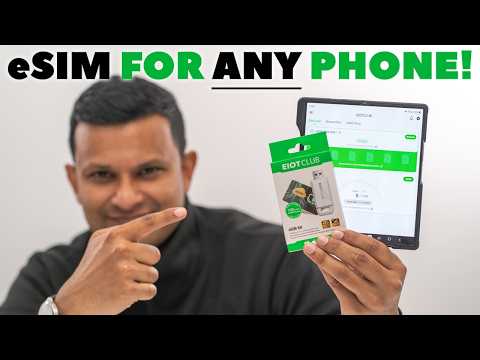
If your smartphone lacks native eSIM support, you can still access an unlimited data plan by using a physical SIM adapter or a dedicated eSIM reader device. These hardware solutions, often called “eSIM to physical SIM” converters, allow you to load your eSIM profile onto a programmable card that fits into your phone’s standard SIM slot. Alternatively, some providers offer a companion app that generates a QR code for temporary virtual installation, but this requires a compatible third-party adapter. For seamless browsing, ensure the adapter supports your phone’s form factor and does not block other network functions.
Navigating Data Caps and Throttling in So-Called Unlimited Deals
My eSIM’s “unlimited” plan worked flawlessly for two weeks until I hit 50GB. The data cap wasn’t a hard stop but a plunge into throttled speeds, making maps buffer and video calls stutter. I learned to monitor usage in the provider’s app, discovering a hidden “full-speed” allowance that reset monthly. Scrolling social media felt fast again once I realized peak-hour streaming drained that allowance fastest. To navigate this, I now download large files on Wi-Fi and save streaming for off-peak hours, preserving full-speed eSIM data for urgent navigation and quick searches. The so-called unlimited deal worked—but only when I treated its cap as a finite tank of genuine speed, not an endless ocean.
Understanding True Unlimited vs. Soft Limits
Understanding true unlimited eSIM data means distinguishing plans with no usage restrictions from those with soft limits. Truly unlimited plans offer uncapped speeds and data volume, while soft limits impose a specified high-speed data threshold, after which speeds are throttled to unusable levels. Always verify the fair usage policy; a plan labeled unlimited may still enforce a soft cap. Distinguishing true versus soft limits requires examining the fine print for throttle points and deprioritization clauses. A plan with a 50GB high-speed allowance is not unlimited, even if marketed as such.

True unlimited delivers consistent speeds without any data threshold; soft limits throttle access after a predetermined usage cap, effectively ending the unlimited experience.
Speed Drops After High Consumption: What Providers Don’t Say
The “unlimited” label on eSIM plans is often a mask for a harsh reality: after you blast through a hidden threshold, providers silently execute a drastic eSIM throttling trigger. This isn’t a graceful slowdown—it’s a deliberate collapse of your connection. Here is the sequence they don’t detail:
- Your consumption hits an undisclosed cap, usually between 30GB and 100GB.
- The provider instantly deprioritizes your data below all other users, even during low network load.
- Streaming buffers endlessly, video calls degrade to pixelated audio, and web pages refuse to load.
No warning comes. You only notice when your “unlimited” eSIM becomes unusable.
Tips for Avoiding Unexpected Restrictions on Streaming or Tethering
To avoid restrictions, first confirm the exact tethering or streaming speed cap in your eSIM’s unlimited data plan fine print, as many deprioritize video after a set threshold. Use a VPN to mask traffic type from network detection, preventing automatic throttling. Configure streaming apps to standard definition (480p) before connecting, and monitor your hotspot app’s data usage to trigger alerts at 80% of any soft limit. Avoid running background updates while tethering, as bulk transfers often flag restrictions.
Pre-read policy limits, reduce resolution, encrypt with a VPN, and avoid bulk transfers to prevent streaming or tethering restrictions.
Best Use Cases for High-Volume Digital Connectivity
The best use cases for high-volume digital connectivity through eSIM unlimited data center on liberating bandwidth-intensive activities from local network constraints. For remote work, it enables seamless video conferencing and large file uploads from any location without throttling. Digital nomads leverage it to run a cloud-based business, streaming HD media and managing backups simultaneously. Travelers use it to maintain constant navigation, live translation, and social media broadcasting across borders without hunting for Wi-Fi. Content creators rely on uninterrupted tethering for live streaming or uploading 4K footage to the cloud. Q: What is the primary advantage for high-volume users? A: Unrestricted, persistent bandwidth for data-heavy workflows anywhere.
Digital Nomads Who Rely on Constant Uploads and Video Calls
For digital nomads whose workflow depends on constant uploads and video calls, an eSIM with unlimited data removes the fear of throttled streams or dropped connections during client meetings. These users require stable bandwidth for real-time collaboration tools, file sharing, and screen sharing across time zones. A single unlimited data plan enables seamless switching between hotel Wi-Fi and cellular networks. Unlimited data plans for remote work ensure consistent upload speeds, preventing lag in video conferencing and large file transfers. What happens if I exceed a data cap during a critical video call? With unlimited data, you never face overage fees or speed reductions, maintaining professional reliability wherever you travel internationally.
Short-Term Travelers Avoiding Local SIM Hassles
For short-term travelers, avoiding local SIM hassles is the primary value of eSIM unlimited data. Instead of hunting for a physical SIM at a foreign airport, navigating language barriers, or dealing with registration bureaucracy for a three-day trip, they activate a plan immediately upon landing. This eliminates the risk of losing a tiny SIM card or needing to top up a prepaid balance before a short return flight. Zero-friction roaming means a freelancer on a weekend trip can start working from a coffee shop the moment they step off the plane, without any logistical delays. The question remains: does unlimited data cost more than buying a local SIM for just four days? Yes, but the saved time and eliminated frustration often justify the premium for high-volume users who need constant connectivity.
Q: How does eSIM unlimited data solve the “find a SIM upon arrival” time waste for someone staying under a week?
A: It eliminates it entirely—you pre-activate the plan before departure, so data works the second you turn on your phone in the new country, requiring zero local errands.
Remote Workers Needing Reliable Hotspot Backup
For remote workers, a flaky home Wi-Fi can derail an entire morning. That’s where having reliable hotspot backup via an eSIM with unlimited data becomes a lifesaver. You can instantly tether your laptop to your phone without hunting for café passwords or burning through a limited plan. This setup handles video calls, large file uploads, and cloud syncs with zero throttling anxiety. Just toggle on the hotspot, and you’re back in flow—perfect for coworking spaces, trains, or sudden outages. It’s your fail-safe for keeping productivity uninterrupted, no matter where your workday takes you.

Cost Breakdown: Monthly Plans vs. Pay-as-You-Go Options
Sarah was a digital nomad hopping between Madrid and Marrakech each month, weighing her eSIM unlimited data costs. A monthly plan at €50 gave her peace of mind—fixed price for unlimited high-speed data, no counting megabytes. But on slow travel months, she’d burn through only 15 GB, making the €3-per-GB pay-as-you-go option cheaper at €45. The trade-off: pay-as-you-go caps speed after 10 GB, throttling her zoom calls, while the monthly plan maintained full-speed access to streaming and uploads. For her friend Leo, who stayed put for six weeks, the monthly plan vs. pay-as-you-go math flipped; he chose the monthly subscription to avoid unpredictable per-GB spikes from daily video conferences. Sarah ultimately used a hybrid—monthly for peak work months, pay-as-you-go for lighter travel.
Finding the Cheapest Per-Gigabyte Rates Across Providers
To find the cheapest per-gigabyte rates across providers, scrutinize regional carriers like Airalo or Holafly, as their unlimited plans often drop to $1–3 per GB on long-term packages, compared to global leaders at $5+. Always check the fine print, as “unlimited” may throttle speeds after a soft cap, effectively raising your per-GB cost for high usage. Focus on long-term eSIM unlimited data bundles (30–90 days) from regional specialists, which consistently undercut monthly renewal rates.
- Compare city-specific eSIMs against national plans; local networks frequently offer lower per-GB prices for unlimited data.
- Use price-comparison apps like eSIMDB to filter unlimited plans by effective per-GB cost after any throttling thresholds.
- Opt for providers with zero throttling policies to maintain true unlimited value, preventing per-GB cost creep.
- Check if the provider offers daily GB rollover within unlimited plans to avoid paying for unused high-speed data.
Why Some Plans Charge Extra for 5G Speeds
Some eSIM unlimited data plans charge extra for 5G speeds because the network congestion and backend costs are higher for that access. Providers often reserve true 5G performance for pricier monthly subscriptions to encourage upgrading. If you opt for a pay-as-you-go eSIM, it typically caps you at 4G LTE, meaning the 5G surcharge funds faster data. For a typical sequence of events:
- Your eSIM connects to the network and detects a 5G tower.
- The provider checks your plan and sees you didn’t pay the 5G fee.
- It throttles your speed back to LTE, avoiding the extra cost on their end.
Combining Multiple Regional eSIMs for Extended Trips
For extended trips spanning multiple regions, combining regional eSIMs offers a smart alternative to a single global plan. You purchase separate unlimited-data eSIMs for each area—e.g., one for Europe, another for Southeast Asia—activating them sequentially as you cross borders. This avoids paying for a costly global plan from day one and prevents coverage gaps in regions where a single provider is weak. Coverage is localized and optimized, while total cost often remains lower than a month-long premium global unlimited plan.
- Activate a new regional eSIM only when entering that region; delete the old profile to free device storage.
- Compare regional plan durations (7 vs. 30 days) to match your exact stay in each area and avoid unused days.
- Purchase all eSIMs before departure to avoid finding reliable connectivity in each new country.
Technical Considerations for Stable Performance
For stable performance with eSIM unlimited data, your device needs to support the right network bands and latest carrier aggregation standards. A common question: Why does my eSIM drop to slow speeds even with unlimited data? This usually happens when your phone’s modem weakens in congested areas or you cross a roaming zone without a proper handover. Always check that your phone’s firmware is updated, as patches improve how the eSIM profiles handle tower switching. Also, keep your eSIM as your primary data line—having two active SIMs can throttle throughput if the device dual-standsby logic isn’t optimized for simultaneous connections. Lastly, reboot your phone after installing a new eSIM profile to clear cached network settings.
Network Priority and Data Routing on Foreign Carriers
When using eSIM unlimited data, network priority on foreign carriers often relegates your traffic behind local subscribers, causing latency spikes during peak hours. Data routing becomes critical: your packets may traverse a home-network proxy or direct peering, with tethering detection potentially segregating mobile hotspot traffic onto slower routes. Throttled routing can degrade real-time apps like video calls, as foreign carriers deprioritize non-native IMSI traffic. Does network priority differ between eSIM providers on the same foreign carrier? Yes—premium plans often negotiate higher QoS and direct local breakout, whereas budget eSIMs route through congested international gateways, increasing packet loss.
Managing Dual SIMs on One Device
Managing Dual SIMs on One Device with an eSIM unlimited data plan means balancing primary and secondary lines to avoid performance hiccups. Ensure your primary eSIM for unlimited data is set as the default for cellular data, while your physical nano-SIM handles calls or SMS. Dual SIM conflict resolution is key—disable automatic network switching if calls drop on one line, as the phone can juggle both radios. A single misconfigured APN can silently throttle your unlimited data when roaming between SIM profiles.
Q: Why does my unlimited data slow down when both SIMs are active?
A: Your device may prioritize the non-data SIM for voice, splitting bandwidth. Set your eSIM as the exclusive data line in settings to avoid this.
Battery Drain and Signal Issues to Anticipate
Unlimited eSIM data can accelerate battery drain and signal issues to anticipate, especially when your device constantly searches for the best network across multiple profiles. Dual-active eSIMs draw more power than a single physical SIM, as the modem works harder to maintain simultaneous connections. Signal instability often spikes indoors or during travel, where the eSIM’s reliance on partner towers creates handoff delays that drain your battery. You might notice your phone heating up during heavy data use—a clear sign of extra modem load.
Q: How can I reduce battery drain with eSIM unlimited data?
A: Disable unused eSIM lines and toggle “low data mode” in network settings to limit background activity. This curbs signal-seeking behavior that eats battery life.
Security and Privacy Benefits of Digital Mobile Profiles
Your digital mobile profile, paired with an esim unlimited data plan, becomes a vault for your connectivity. Instead of a physical tray, your identity is stored as encrypted software, making it nearly impossible for thieves to clone your line. When you travel, you simply load a new digital mobile profile for local unlimited data, instantly isolating your main number from regional risks. Should you misplace your phone, you can remotely erase that specific profile, severing access to your data stream without touching your primary account. This separation ensures your private communications ride on a secure, disposable digital layer, not a vulnerable plastic card.
Encryption Standards Compared to Traditional Roaming
Traditional roaming often relies on legacy SS7 and Diameter signaling protocols, which have known vulnerabilities to interception and location tracking. In contrast, eSIM unlimited data encryption standards employ modern, end-to-end cryptographic methods, such as AES-256, for both profile provisioning and data transmission. This reduces exposure during network handovers between carriers. The practical result for users is a layered defense:
- Profile download from the remote server is encrypted before reaching the device.
- All active data sessions in foreign networks use stronger cipher suites than typical SIM-based roaming.
- Authentication keys are stored in a secure element, preventing cloning attacks common in traditional roaming.
Avoiding Spoofed Cellular Towers Abroad
When traveling abroad, attackers deploy spoofed cellular towers (IMSI catchers) to intercept traffic. An eSIM with unlimited data inherently prevents your device from connecting to these rogue towers by relying exclusively on the roaming profile’s pre-configured network agreements. Physical SIMs often auto-connect to any available signal, but a digital profile enforces strict network authentication, blocking non-partner towers. Avoiding spoofed cellular towers abroad is thus a direct security feature of eSIM technology, as your device never fully hands over control to an unfamiliar local tower for voice or data traffic. This protection remains active even when the unlimited data plan’s network signal is weak, preventing fallback to an untrusted cell.
An eSIM with unlimited data neutralizes spoofed towers by restricting connectivity to only pre-verified roaming partners, blocking IMSI catchers before any data exchange occurs.
Keeping Your Primary Number Private While Traveling
Using an eSIM for unlimited data allows you to purchase a local data plan while keeping your primary number completely offline. By deactivating the physical SIM slot or primary eSIM profile, you eliminate exposure to SIM-swapping attacks and spam calls targeting your home number. This separation ensures your private contacts and two-factor authentication codes remain inaccessible to local networks. For any essential communication, you route it through encrypted VoIP apps on your active data line. This method is your first line of defense against digital pickpocketing in crowded transit hubs and tourist zones.
Your primary number stays invisible China eSIM to local carriers and malicious actors, accessible only via your own encrypted device.
Future Trends Shaping the eSIM Market for Heavy Data Users
For heavy data users, the primary future trend shaping the eSIM market is the shift from simple “unlimited” plans to intelligent, application-aware data prioritization. Instead of throttling after a soft cap, future eSIMs will dynamically allocate high-bandwidth lanes for critical tasks—like 4K streaming or large file backups—while deprioritizing background apps.
The key insight is that true unlimited data will no longer mean unmanaged data; expect eSIM profiles that learn your usage patterns to prevent congestion during peak hours.
This will be paired with multi-network aggregation, allowing a single eSIM to seamlessly bond multiple local carriers’ frequencies, delivering the consistent high-throughput heavy users demand without relying on a single, congested infrastructure.
Potential for Truly Flat-Rate Global Coverage
For heavy data users, the dream is a single, predictable bill for global connectivity. The potential for truly flat-rate global coverage means you could pay one set price each month and never worry about per-country surcharges or daily passes. This would eliminate the mental math of “is this country expensive?” and let you stream, upload, and navigate anywhere without pausing. The key is a provider absorbing all roaming costs into a single, high-value unlimited global data plan, making your phone feel like it’s always on home turf, no matter which continent you land on.
Integration with IoT and Wearable Devices
Integration with IoT and Wearable Devices transforms the eSIM into the backbone of a truly connected lifestyle. An unlimited data eSIM enables your smartwatch to stream music and take calls without a tethered phone, while your car’s telematics system handles real-time navigation and diagnostics independently. This seamless synchronization means heavy data users can leave their primary device behind, trusting a single eSIM profile to manage a smart ring, fitness tracker, or health monitor. Unlimited data for wearables eliminates pairing hassles and data caps.
Q: Can one unlimited eSIM plan power all my IoT devices simultaneously?
A: Yes, a single unlimited eSIM profile can be provisioned across your smartwatch, smart glasses, and car system, sharing the same data pool without throttled speeds on any individual device.
How Regulatory Changes Could Lower Costs Further
If regulators enforce stricter transparency on wholesale data pricing, competition among virtual operators could intensify, directly reducing retail costs for consumers. Mandated sharing of network infrastructure might then allow smaller eSIM providers to offer unlimited data plans at lower margins. A rule capping roaming fees would further shrink surcharges for global heavy users.
Will regulatory changes actually make unlimited data cheaper? Yes—by breaking legacy pricing models and forcing incumbents to compete on pure data value rather than artificial tiers.